Investment Property Loans: Financing Rental Properties
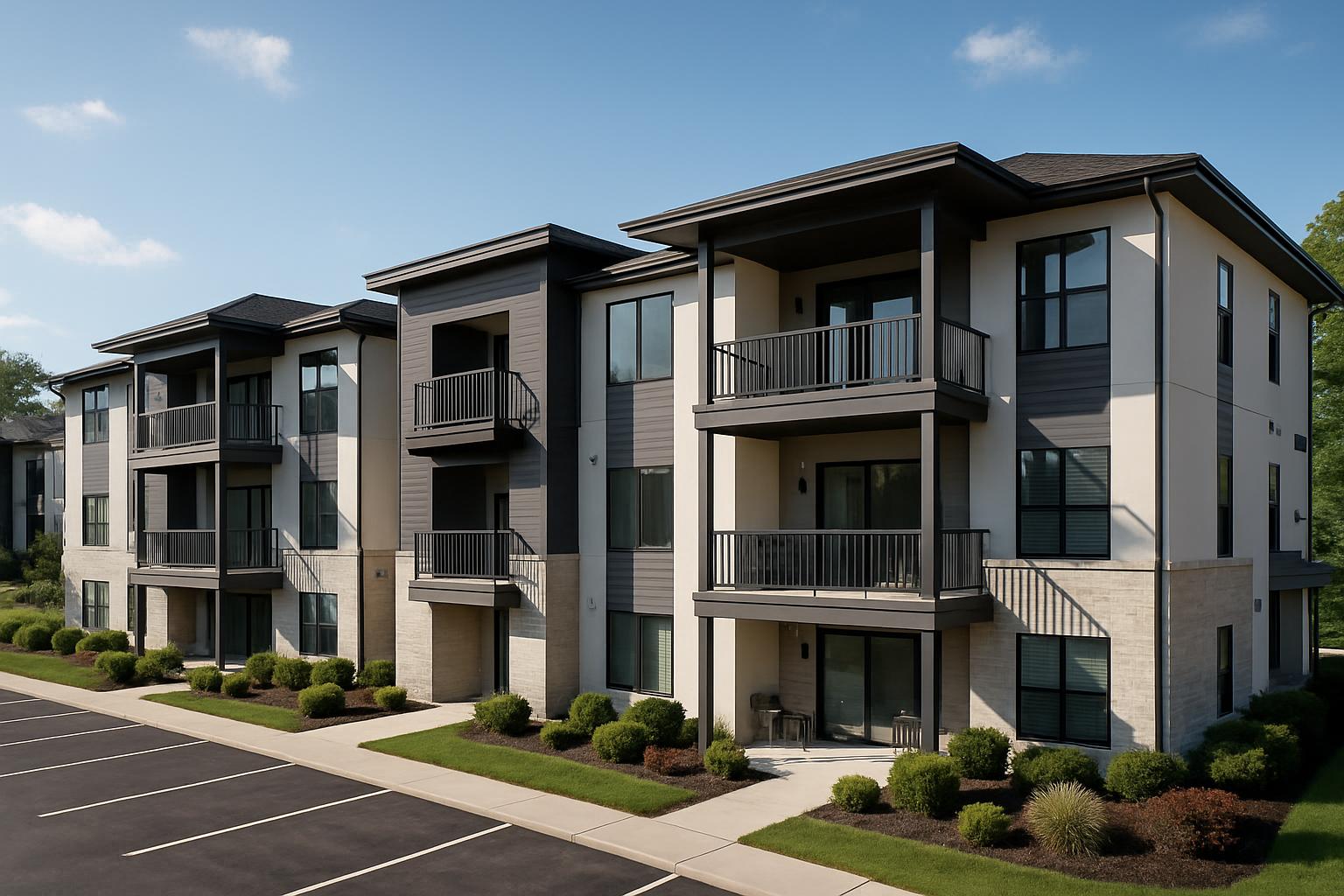

Financing an investment property differs fundamentally from financing a primary residence. Lenders impose stricter requirements because investors statistically have higher default risk on investment properties than on their own homes during financial hardship. Understanding these differences helps you approach investment property financing with realistic expectations and a sound strategy from the start.
Coventry Enterprises LLC Loans prepared this guide to help real estate investors understand the full landscape of investment property financing, from conventional mortgages to specialized investor products like DSCR loans and portfolio financing.
Down Payment Requirements
The minimum down payment for a conventional investment property loan is typically 15 percent for a single-family property, though 20 to 25 percent is more common and required for multi-unit properties with two to four units. Some lenders require 25 percent down for all investment properties regardless of unit count. A larger down payment reduces lender risk and almost always results in better interest rates and easier qualification.
No-down-payment programs including VA, USDA, and FHA are generally not available for investment properties. VA and USDA require owner occupancy. FHA requires occupancy as well, though there is an exception for multi-family properties where the borrower purchases a two-to-four unit building, lives in one unit, and rents the others. This owner-occupant multi-family strategy is a popular entry point for new investors.
Investment Property Interest Rates
Investment property mortgage rates run 0.5 to 1.0 percent higher than rates for comparable primary residence loans. On a $300,000 loan, a 0.75 percent rate premium adds approximately $150 per month to the payment. Over 30 years that premium represents more than $54,000 in additional interest. Investors must build this cost into their return calculations before making purchase decisions.
Rental Income Qualification
Lenders allow rental income to be counted when qualifying for investment property loans but apply a haircut to account for vacancy and expenses. The most common approach is counting 75 percent of gross monthly rent. This 75 percent factor represents a vacancy allowance and approximates basic operating costs. Rental income must be documented through existing leases, a market rent appraisal in the property appraisal report, or Schedule E from federal tax returns for properties with an existing rental history.
DTI Considerations
Investment property loans are subject to the same general DTI limits as primary residence loans, typically 45 percent for conventional financing. However the calculation is more complex because the new mortgage payment, net rental income, and all existing debts must be factored together. When rental income offsets part of the new mortgage payment through the 75 percent rule, it can significantly improve the DTI picture and help borrowers qualify for properties they could not otherwise afford based on personal income alone.
DSCR Loans for Investors
Debt Service Coverage Ratio loans qualify the borrower based on the property's rental income rather than personal income. The property must generate enough rent to cover the mortgage payment, measured by dividing gross rent by the mortgage payment. Most DSCR lenders require a minimum ratio of 1.0 to 1.25. These loans require no personal income documentation, making them particularly valuable for self-employed investors, those with complex tax situations, or investors building large portfolios beyond the conventional 10-property limit.
Portfolio Loans
Portfolio lenders keep loans on their own books rather than selling them to Fannie Mae or Freddie Mac. This gives them flexibility to create customized programs for investors including blanket loans covering multiple properties simultaneously, alternative income documentation, and borrower situations that conventional guidelines would reject. Rates and terms vary widely and these programs require more shopping to evaluate.
Cash-Out Refinancing on Investment Properties
Investors can access equity in existing rental properties through cash-out refinancing. For investment properties most conventional lenders allow cash-out up to 75 percent LTV, compared to 80 percent for primary residences. The BRRRR strategy (Buy, Rehab, Rent, Refinance, Repeat) uses cash-out refinancing to recycle equity into additional acquisitions, allowing investors to scale their portfolio with recycled capital rather than requiring fresh equity for every purchase.
Benefits of Investment Property Financing
- Leverage amplifies returns on invested capital
- Rental income can cover the mortgage while equity builds over time
- Appreciation potential adds to total investment returns
- Tax benefits including depreciation and mortgage interest deduction on investment properties
- Multiple loan products available for different investor profiles and portfolio stages
Drawbacks
- Higher rates and larger down payment requirements than primary residence loans
- More stringent qualification process with detailed documentation
- No government-backed low-down-payment options for pure investment properties
- Vacancy and maintenance costs can rapidly erode cash flow projections
Common Mistakes to Avoid
Underestimating operating costs: Mortgage payment, property taxes, insurance, maintenance, property management fees, and realistic vacancy must all be modeled before purchasing. Positive cash flow on paper frequently disappears when all costs are counted honestly.
Overleveraging: High LTV loans on many properties reduce the cash flow cushion and leave little margin for vacancies, repairs, or rate adjustments. Keep debt service coverage ratios healthy and reserve funds available.
Not having reserves: Investment properties require emergency reserves for repairs and unexpected vacancies. Maintain adequate reserves even if the lender does not specifically require them as a loan condition.
Ignoring local market conditions: Cap rates, vacancy rates, and rent growth vary significantly by market and neighborhood. National averages do not apply to specific local investments.
When Investment Property Financing Makes Sense
Investment property financing makes sense when the property's numbers support positive cash flow or strong appreciation potential with conservative assumptions, you have sufficient reserves to weather vacancy and unexpected costs, and you have a clear investment strategy and defined exit or hold criteria. At Coventry Enterprises LLC Loans, we encourage all investors to stress-test their cash flow projections with higher vacancy and expense assumptions before committing to any investment property purchase.
Frequently Asked Questions
How much down payment is required?
Typically 15 percent for single-family and 25 percent for multi-unit investment properties.
Are investment property rates higher?
Yes, 0.5 to 1.0 percent above primary residence rates to compensate for increased lender risk.
Can rental income be used to qualify?
Yes. Lenders typically count 75 percent of gross rental income after the vacancy factor toward qualifying income.
What is a DSCR loan?
A loan qualifying based on the property's rental income relative to the debt service rather than personal income. Requires a DSCR of 1.0 to 1.25 typically.
Can I cash-out refinance an investment property?
Yes, up to 75 percent LTV for most conventional programs on investment properties, compared to 80 percent for primary residences.