Equipment Financing: Business Equipment Loans and Leases Explained
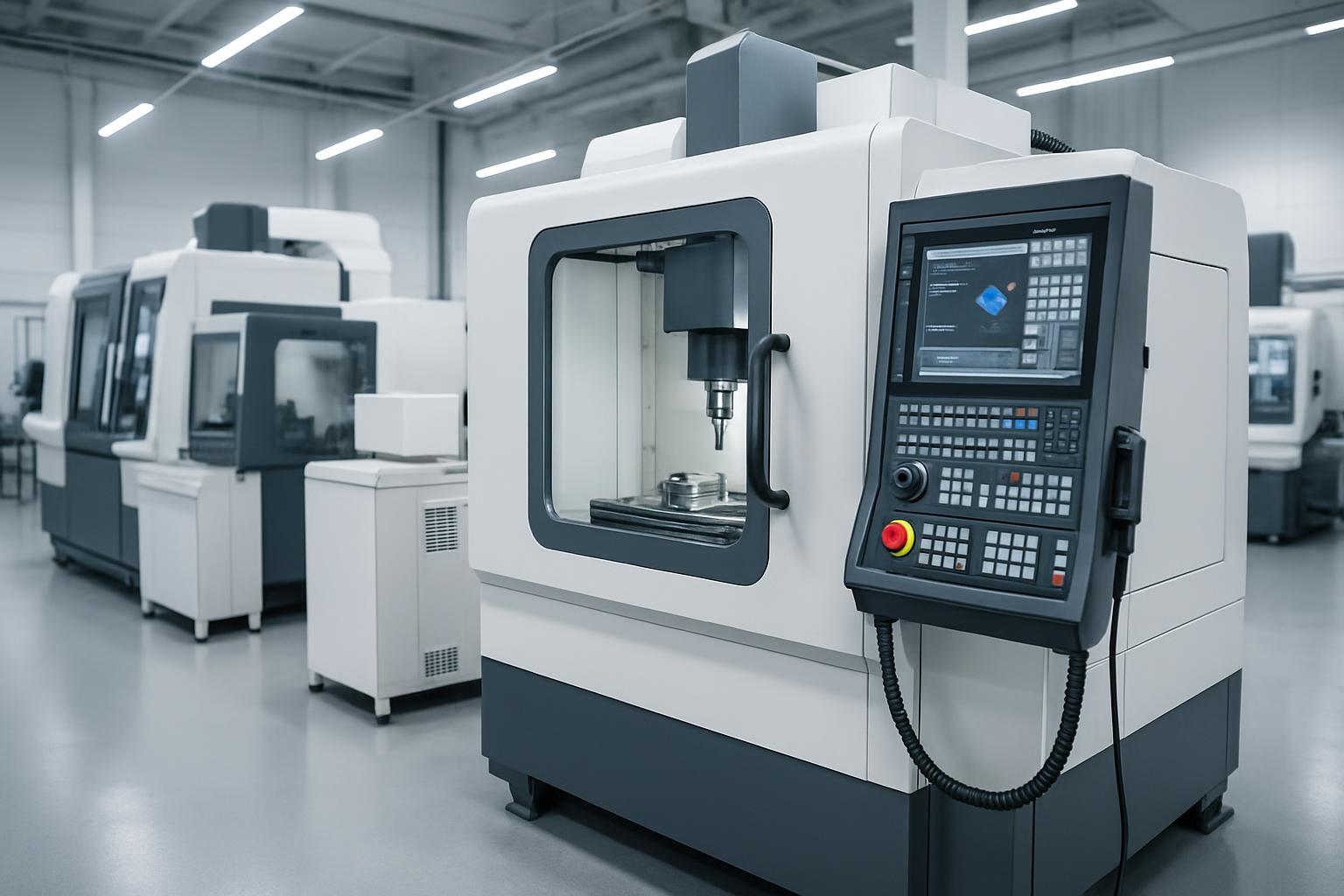
Every business needs equipment to operate. Whether you're a manufacturer buying machinery, a construction company acquiring vehicles, or a medical practice purchasing diagnostic equipment, finding the right financing solution is critical to managing cash flow and preserving working capital. Equipment financing has become one of the most common forms of business lending because equipment itself can serve as collateral, making these loans accessible to businesses that might struggle to qualify for unsecured financing.
Understanding Equipment Financing
Equipment financing refers to borrowing money specifically to purchase machinery, vehicles, technology, and other assets your business needs to operate. Unlike general business loans that can be used for multiple purposes, equipment financing is purpose-specific. The equipment you purchase serves as collateral for the loan, which means the lender has a security interest in the asset. If you default on the loan, the lender can repossess and sell the equipment to recover their investment.
This collateral-based structure makes equipment financing significantly more accessible than unsecured business loans. Lenders are comfortable offering equipment financing to businesses with less-than-perfect credit or limited operating history because they have a tangible asset backing the loan. The equipment has resale value, can be liquidated relatively quickly if needed, and depreciates in a predictable manner.
Equipment financing comes in two primary forms: loans and leases. Equipment loans give you ownership of the asset and allow you to build equity from the first payment. Equipment leases are rental arrangements where you pay monthly fees for the right to use the equipment, but you never own it. Each approach has distinct advantages depending on your business situation, cash flow needs, and tax considerations.
Equipment Loans: Ownership and Equity
An equipment loan is straightforward: you borrow money from a lender, purchase the equipment outright, and repay the loan over time with interest. You own the equipment from day one and hold the title. As you make loan payments, you build equity in the asset, meaning your ownership stake increases while the lender's security interest decreases.
Equipment loans typically have terms ranging from three to seven years, though some lenders offer extended terms up to ten years for certain equipment types. Interest rates on equipment loans generally range from six to thirteen percent depending on several factors. Equipment that depreciates quickly, such as consumer electronics or vehicles, typically carries higher interest rates. Specialized equipment with limited resale appeal also commands higher rates. Conversely, industrial equipment with broad market demand and predictable resale value often qualifies for lower rates.
Your creditworthiness matters in equipment loan pricing. Borrowers with strong credit scores in the 750 and above range qualify for more favorable rates. Those with credit in the 650-750 range typically pay rates in the middle of the spectrum. Even borrowers with credit challenges can access equipment financing, though rates will be higher to compensate for the risk.
The loan amount depends on the equipment's value and your down payment. Many equipment lenders require ten to twenty percent down, with some financing the remaining eighty to ninety percent. A larger down payment improves your loan terms and reduces the lender's risk. It also builds your equity faster and reduces the total interest you'll pay over the loan's life.
Understanding Equipment as Collateral
Equipment serves as hard collateral, meaning it has physical form and identifiable value. When you finance equipment, the lender places a lien on the asset, giving them the right to repossess it if you fail to make payments. This security interest makes equipment financing possible for businesses that might not otherwise qualify for unsecured lending.
Lenders evaluate equipment based on its depreciation rate, resale market, and general condition. Equipment that holds value well, has active secondary markets, and is in good condition qualifies more easily and at better rates. A lender financing used manufacturing equipment that's ten years old and has uncertain resale prospects will charge higher rates than one financing new equipment from a major manufacturer.
The lender's ability to repossess and sell the equipment if you default provides them confidence in the loan. This security interest also protects you in some ways. Because the equipment is collateral, you're not typically required to provide personal guarantees on smaller equipment loans, unlike business term loans that often require personal guarantees from business owners.
Equipment Leases: Flexibility Without Ownership
Equipment leasing is fundamentally different from equipment loans. A lease is essentially a rental agreement where you pay monthly fees to use equipment without owning it. The lessor owns the equipment and maintains the title. At the end of the lease term, you return the equipment to the lessor. Some leases include buyout options that allow you to purchase the equipment at the end of the lease term, typically at fair market value or a pre-agreed price.
Leases are popular because monthly payments are typically lower than loan payments for the same equipment. This preserves cash flow and reduces the strain on working capital. Leases also provide flexibility. When your business needs change or technology becomes obsolete, you can return the equipment and get newer models. For technology that rapidly evolves, like computers and software systems, leasing prevents obsolescence issues that come with ownership.
Lease payments are often fully deductible as business expenses on your tax return, though this depends on the lease structure and IRS classification. Leases are classified as either operating leases or capital leases for accounting purposes. Operating leases typically appear as expenses, while capital leases are capitalized on your balance sheet and depreciated.
The downside of leasing is that you build no equity. Every payment goes to the lessor, and at the end of the lease term, you have nothing to show for those payments except the use of the equipment during the lease period. For equipment your business will use long-term, ownership through a loan often makes more financial sense than leasing over multiple years.
Soft vs. Hard Collateral in Equipment Financing
Equipment financing deals with hard collateral, the physical equipment being financed. However, some financing includes soft collateral as well. Soft collateral includes business assets that don't have physical form, such as accounts receivable, inventory, or intellectual property. Some equipment lenders require both the equipment and soft collateral as security, particularly for larger loans or borrowers with credit challenges.
Hard collateral is more valuable to lenders because it's tangible and can be repossessed and sold relatively quickly. Soft collateral is more difficult to liquidate and provides less security. Most equipment lenders focus primarily on the equipment itself as collateral, which is why equipment financing is available to businesses that might struggle with unsecured lending.
Tax Implications and Depreciation
One significant advantage of equipment ownership through loans is tax depreciation. When you purchase equipment with a loan, you own it and can depreciate it on your tax return over its useful life. Depreciation is a non-cash deduction that reduces your taxable income, providing tax benefits even though you're not spending cash on the depreciation itself.
Section 179 of the Internal Revenue Code allows you to deduct the full purchase price of certain business equipment in the year you acquire it, rather than depreciating it over several years. This can result in substantial tax deductions in the year of purchase. Bonus depreciation rules also allow accelerated deductions under certain circumstances. These tax benefits make equipment ownership particularly attractive for profitable businesses looking to reduce their tax liability.
Leased equipment cannot be depreciated because you don't own it. However, lease payments are fully deductible business expenses. For businesses that prefer the tax deduction of depreciation over lease payments, ownership through equipment loans is more advantageous. Consult with your tax professional to understand how different equipment financing approaches affect your specific tax situation.
Equipment Loan Qualification and Application
Equipment financing has become increasingly accessible because of the collateral-based structure. Most lenders require a personal credit score of at least 600 to 650, though higher scores result in better rates. Business credit is also evaluated, particularly for newer businesses without strong personal credit. Some lenders focus more heavily on the equipment's value and condition than on credit scores, recognizing that the equipment itself is the primary security.
Your business should ideally have been operating for at least six months to one year. New businesses can sometimes access equipment financing, particularly if the owner has strong personal credit and can make a substantial down payment. Established businesses with two or more years of operating history and documented profitability qualify more easily and at better rates.
The application process typically requires business tax returns for the past two years, personal tax returns, current business financial statements, and documentation of the equipment being purchased. Equipment lenders want to verify that the equipment exists, confirm its purchase price, and ensure it has value as collateral. Some lenders require equipment appraisals for higher-value items.
The application and approval process for equipment loans is often faster than for other business loans because the collateral simplifies the decision. Some lenders can approve straightforward equipment loans within two to three business days. This speed makes equipment financing attractive when you need equipment quickly to fulfill customer orders or keep your business running.
Comparing Loan vs. Lease: Making the Right Choice
Choosing between an equipment loan and a lease depends on several factors. If you plan to use the equipment long-term and want to build equity, ownership through a loan typically makes financial sense. If you'll need the equipment for just a few years or want the flexibility to upgrade frequently, leasing is more practical. If tax depreciation benefits matter significantly to your business, ownership is advantageous. If your primary concern is preserving cash flow, leasing offers lower monthly payments.
Equipment type also influences the decision. Technology that rapidly becomes obsolete is often better leased. Vehicles used for business transportation can go either way, though many companies prefer leasing for tax simplicity and lower maintenance responsibility. Specialized manufacturing equipment that your business will use for many years is typically worth purchasing through a loan.
Calculate the total cost of ownership through both options. Compare loan payments plus maintenance costs against lease payments. Factor in the residual value if you'll eventually sell owned equipment. For borrowers in higher tax brackets with significant taxable income, the depreciation benefits of ownership can be substantial. For break-even or loss-making businesses, these tax benefits have no value, making leasing more attractive.
Equipment Financing and Cash Flow Management
Equipment financing directly impacts your business's cash flow. Equipment loans require fixed monthly payments over the loan term. When budgeting, ensure your business generates sufficient revenue to cover equipment payments along with all other operating expenses and existing debt obligations. Many lenders evaluate your debt service coverage ratio, wanting to see that your business income covers all debt payments by at least 1.2 times.
Equipment leases also affect cash flow through fixed monthly payments. However, lease payments are typically lower than equipment loan payments, which can improve cash flow. The tradeoff is that you're not building equity in the asset. For growth-stage businesses focused on conserving cash, leasing can be the better choice despite the higher long-term cost.
Consider how equipment acquisition aligns with your business's growth trajectory. Equipment purchased to handle current customer demand is immediately productive and generates revenue to cover its financing costs. Equipment purchased speculatively in hopes of future growth adds fixed costs without guaranteed revenue improvement.
Frequently Asked Questions
What is the difference between an equipment loan and an equipment lease?
An equipment loan is a business loan where you borrow money to purchase equipment and own it outright after the loan is repaid. You build equity from the first payment and can depreciate the asset. An equipment lease is a rental agreement where you pay a monthly fee to use the equipment without ownership. At lease end, you return the equipment or have buyout options. Equipment leases typically have lower monthly payments but offer no ownership benefits.
What types of equipment can be financed?
Most equipment can be financed through equipment loans and leases, including machinery, vehicles, manufacturing equipment, medical devices, construction equipment, and technology systems. Some soft assets like software subscriptions and vehicles used primarily for personal purposes may have limitations. Equipment lenders evaluate whether the equipment has resale value and a clear market if the lender needs to repossess and liquidate it.
What is a typical equipment loan term and interest rate?
Equipment loan terms typically range from 3 to 7 years, with some manufacturers offering extended terms up to 10 years. Interest rates on equipment loans generally range from 6 to 13 percent depending on the equipment type, loan amount, down payment, borrower creditworthiness, and economic conditions. Equipment that depreciates quickly typically has higher rates. Established businesses with strong credit often qualify for more favorable rates.
How does equipment serve as collateral?
Equipment financed through loans serves as collateral for the lender. This means the lender has a security interest in the equipment and can repossess and sell it if you default on the loan. Equipment is particularly effective collateral because it has identifiable value and can be repossessed and resold relatively easily. This makes equipment financing possible even for borrowers with limited other collateral or credit challenges.