Commercial Real Estate Loans Explained
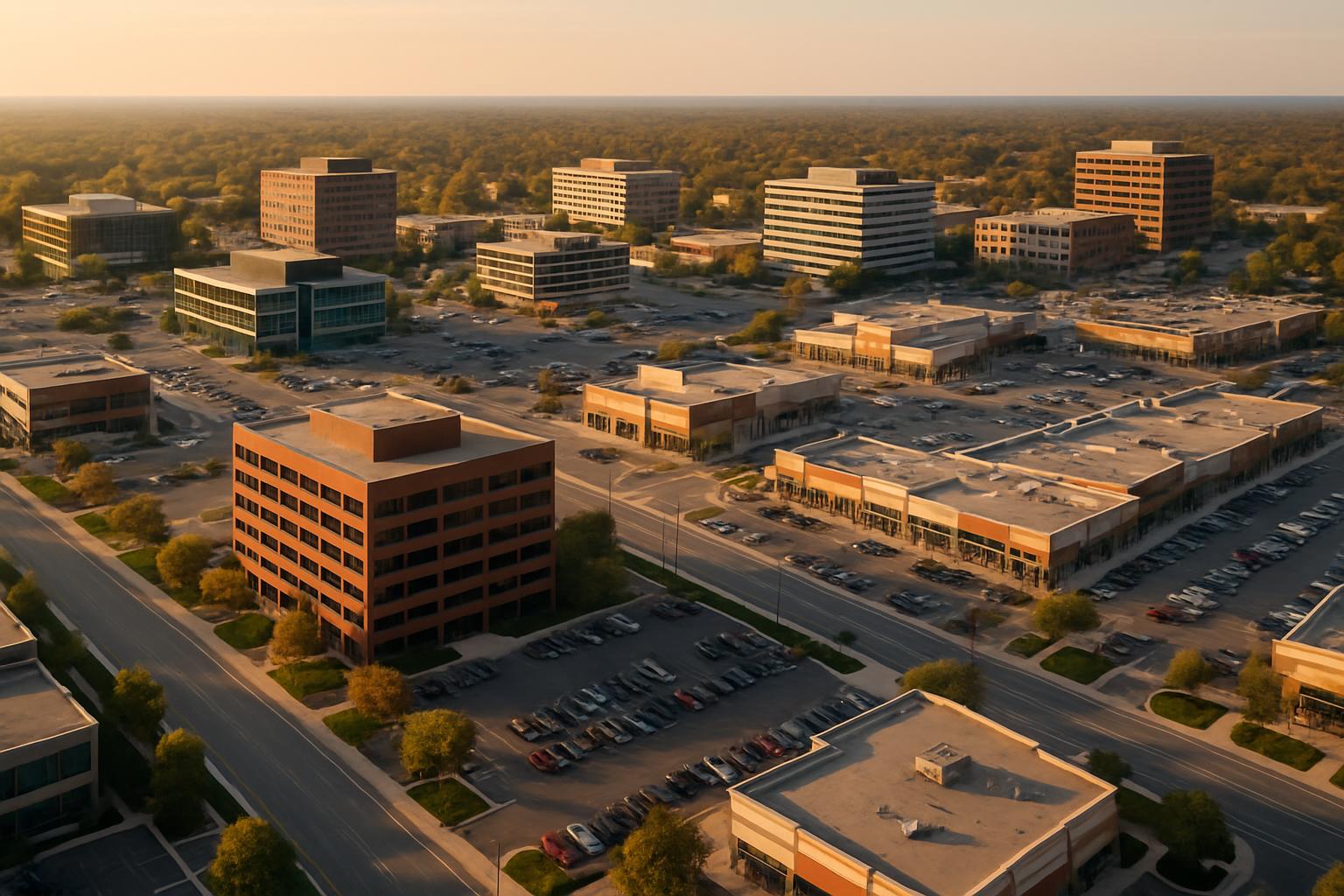

Commercial real estate loans fund the purchase, development, or refinancing of income-producing properties such as office buildings, retail centers, apartment complexes, industrial warehouses, and mixed-use developments. They operate under fundamentally different rules than residential mortgages, with the property's income-generating capacity serving as the primary underwriting focus rather than the borrower's personal financial profile.
At Coventry Enterprises LLC Loans, we recognize that commercial real estate financing can seem complex for those more familiar with residential mortgages. This guide breaks down the key loan types, underwriting metrics, and qualification requirements to help investors and business owners approach commercial financing with a clear understanding.
Commercial vs. Residential Mortgages
Residential mortgages are underwritten primarily on personal income, credit score, and DTI ratio. Commercial loans shift focus to the property's income and its ability to service the debt, measured through the Debt Service Coverage Ratio. The borrower's financial strength still matters but the property's cash flow is the primary repayment source in the lender's analysis. This means a business owner with modest personal income but a strong income-producing property can often obtain commercial financing that personal income-based underwriting would not support.
Commercial loans are also typically shorter in term than residential mortgages, often 5 to 10 years, with a balloon payment requiring refinancing or full repayment at maturity. Amortization periods of 20 to 25 years create manageable monthly payments, but the loan balance does not reach zero by the end of the initial term. Planning for this balloon payment is essential before committing to commercial financing.
Types of Commercial Real Estate Loans
Conventional commercial mortgages are offered by banks and commercial lenders with the most flexibility in property types. They typically require 20 to 35 percent down, a minimum DSCR of 1.20 to 1.25, and personal guarantees from principal owners.
SBA 504 loans are specifically designed for owner-occupied commercial properties. The structure involves a conventional lender providing approximately 50 percent as a first mortgage, a Certified Development Company providing approximately 40 percent backed by SBA debentures, and the borrower contributing as little as 10 percent down. This structure provides below-market long-term fixed rates on a significant portion of the project cost and is one of the most attractive ways to finance owner-occupied commercial real estate.
SBA 7(a) loans are more flexible than 504 loans and can fund commercial real estate as well as working capital and equipment. Loan amounts reach up to $5 million with potentially longer terms and lower down payments than standard conventional commercial loans.
Commercial bridge loans provide short-term financing for value-add properties that need renovation or lease-up before qualifying for permanent financing. They carry higher rates and typically run 12 to 36 months, with the expectation of refinancing into a permanent commercial mortgage upon stabilization.
Key Underwriting Metrics
The Debt Service Coverage Ratio divides the property's net operating income by the annual debt service. A DSCR of 1.25 means the property generates $1.25 for every $1.00 of mortgage obligation. Most lenders require a minimum of 1.20 to 1.25. Commercial loan-to-value limits typically range from 65 to 80 percent depending on property type and program. Office buildings and retail properties in secondary markets often face more conservative limits than multifamily properties in primary markets.
Personal Guarantees
Most commercial lenders require personal guarantees from principals with 20 percent or more ownership in the borrowing entity. A personal guarantee means that if the LLC or corporation defaults, the lender can pursue the individual's personal assets to satisfy the remaining debt. This is a critical distinction from the limited liability protection corporate structures otherwise provide and should be factored into the business risk assessment before signing.
Prepayment Penalties
Commercial loans commonly carry significant prepayment penalties that can make early loan payoff very expensive. Yield maintenance provisions require the borrower to compensate the lender for lost interest income if the loan is paid off before maturity. Defeasance is another structure where the borrower substitutes government securities for the mortgage collateral. Understanding these exit costs before committing to a commercial loan structure is essential for any investor planning an active portfolio management strategy.
Benefits
- Property cash flow rather than personal income drives primary qualification
- Multiple programs including government-backed SBA options
- Flexible structures for different investment and business strategies
- Builds long-term commercial real estate portfolio with institutional financing
Drawbacks
- Balloon payment requires refinancing or full repayment at term end
- Larger down payments of 20 to 35 percent
- Personal guarantees expose individual assets to business loan risk
- More complex underwriting with higher transaction costs
- Significant prepayment penalties in many structures
Common Mistakes to Avoid
Unrealistic income projections: Lenders and appraisers apply market vacancy and expense assumptions. Projections that do not survive this scrutiny will either delay or kill the deal.
Not planning for the balloon payment: A 5 or 10 year balloon requires either refinancing or sale. Have a credible exit strategy before committing to the loan.
Ignoring prepayment costs: Early loan payoff on a commercial mortgage can cost hundreds of thousands of dollars in yield maintenance or defeasance. Understand every exit scenario before signing.
When Commercial Loans Make Sense
Commercial real estate loans are the right financing tool when purchasing income-producing properties for investment or business use. The property income focus can be advantageous for experienced investors with strong portfolios. At Coventry Enterprises LLC Loans, we provide educational resources to help investors and business owners make well-informed decisions about commercial real estate financing strategies and structures.
Frequently Asked Questions
What is a typical commercial loan term?
5 to 10 years with 20 to 25 year amortization. Balloon payments require refinancing or payoff at the end of the initial term.
What DSCR is required?
Minimum 1.20 to 1.25. Higher ratios receive better terms and lower rates.
What down payment is needed?
20 to 35 percent typically. SBA 504 loans can reduce this to 10 percent for owner-occupied properties.
What is a personal guarantee?
A commitment by the business owner to personally repay the loan if the entity defaults. Required from principals with 20 percent or more ownership.
What is an SBA 504 loan?
A government-backed program for owner-occupied commercial property using a three-part structure that provides below-market long-term fixed rates with as little as 10 percent down.